Tanzania
Choose Meremeta Safaris Today.
The 7 Days Umbwe Route is one of the shortest yet steepest routes to the summit of Mount Kilimanjaro, standing tall at 5,895 meters above sea level. Famous for its direct approach and less crowded trail, it’s best suited for experienced trekkers looking for a raw and adventurous experience.
The trail begins in the lush rainforest zone, continues through scenic ridges and valleys, and merges with the Machame Route at Barranco Camp before heading toward the summit via Barafu Camp. Though challenging, this extended 7-day itinerary allows for better acclimatization than the traditional 6-day version, increasing your chances of a successful summit.
Detailed 7 Days Umbwe Route Kilimanjaro Itinerary
Day 1: Arrival in Moshi – Pre-Trek Preparation
Upon arrival at Kilimanjaro International Airport, you’ll be transferred to your hotel in Moshi for a pre-climb briefing and gear check. Your guide will explain the trek in detail, discuss safety procedures, and ensure you have all the necessary equipment. Rest well and prepare for the adventure ahead.
Day 2: Umbwe Gate (1,800m) to Umbwe Cave Camp (2,850m)
The journey begins at Umbwe Gate, where you register and start trekking through a dense rainforest. The trail is steep and narrow, winding between towering trees and thick vegetation. This is one of the most physically demanding starts on Kilimanjaro.
Trekking time: 5–7 hours | Distance: 10 km | Habitat: Rainforest
Day 3: Umbwe Cave Camp to Barranco Camp (3,950m)
After breakfast, you continue climbing along a ridge that leads to the moorland zone. The trail gradually opens up to breathtaking views of the valleys below and glaciers above. You will connect with the Machame Route near Barranco Camp, one of the most scenic spots on the mountain.
Trekking time: 5–6 hours | Distance: 7 km | Habitat: Heath and Moorland
Day 4: Acclimatization Day at Barranco Camp
Today focuses on acclimatization. After breakfast, you’ll tackle the famous Barranco Wall — a thrilling scramble with rewarding panoramic views. Descend gently to Karanga Camp where you’ll spend the night. This day helps your body adjust to high altitude, improving summit success.
Trekking time: 4–5 hours | Distance: 6 km
Day 5: Karanga Camp to Barafu Camp (4,673m)
The trail continues upward through alpine desert. The landscape becomes barren and rocky with sparse vegetation. You’ll reach Barafu Camp by late afternoon — your base camp for the summit push. Early dinner and rest are essential as the summit attempt starts around midnight.
Trekking time: 4–5 hours | Distance: 4 km
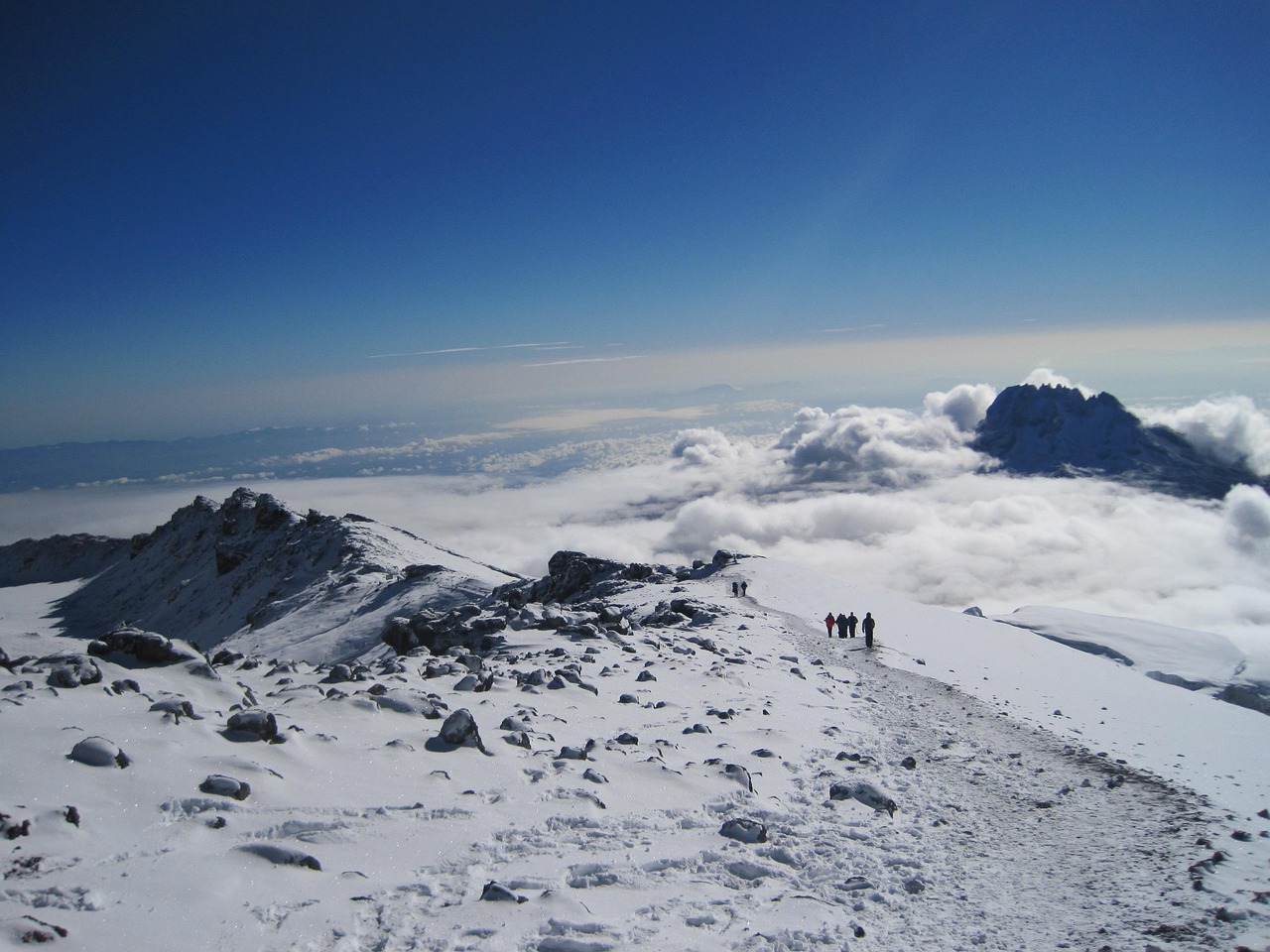
Day 6: Summit Day – Barafu Camp to Uhuru Peak (5,895m) and Descend to Mweka Camp (3,100m)
This is the most challenging yet rewarding part of your trek. Begin your ascent at midnight under starlit skies. The climb to Stella Point (5,756m) is steep and demanding, but from there, it’s a gradual walk to **Uhuru Peak**, the highest point in Africa.
Celebrate your victory, take breathtaking photos, and begin your descent to Mweka Camp for an overnight rest.
Trekking time: 12–15 hours | Distance: 17 km
Day 7: Mweka Camp to Mweka Gate (1,640m)
After breakfast, descend through the rainforest trail to Mweka Gate where you’ll collect your summit certificates. You’ll then be transferred back to Moshi for a warm shower, celebration, and overnight rest.
Trekking time: 3–4 hours | Distance: 10 km
Difficulty Level and Preparation
The Umbwe Route is considered one of the most challenging Kilimanjaro climbs due to its steep and direct ascent. Good physical fitness, prior hiking experience, and proper acclimatization are crucial. The 7-day itinerary improves success rates by including an extra day for altitude adjustment compared to the 6-day version.
Best Time to Trek Umbwe Route
The best seasons are from January to mid-March and June to October, when the weather is dry and visibility is excellent. Avoid the long rainy season (April to May) when trails can be slippery and views obscured by fog.
Why Choose the 7-Day Version?
- Extra acclimatization day for better summit success.
- Less crowded and more peaceful than popular routes like Machame or Marangu.
- Offers stunning wilderness scenery and dramatic ridgelines.
Sample Table: Quick Overview of 7 Days Umbwe Route
| Day | Route Section | Elevation (m) | Distance (km) | Time (hrs) |
|---|---|---|---|---|
| 1 | Umbwe Gate to Umbwe Cave | 2,850 | 10 | 6 |
| 2 | Umbwe Cave to Barranco Camp | 3,950 | 7 | 6 |
| 3 | Acclimatization at Karanga | 4,000 | 6 | 5 |
| 4 | Karanga to Barafu Camp | 4,673 | 4 | 5 |
| 5 | Summit and descend to Mweka | 5,895 | 17 | 14 |
| 6 | Mweka Camp to Mweka Gate | 1,640 | 10 | 3 |
Final Thoughts
The 7 Days Umbwe Route Kilimanjaro trek is perfect for those seeking a remote and physically demanding climb with an authentic wilderness feel. While it requires determination and preparation, the rewards are unmatched — breathtaking views, a sense of achievement, and the unforgettable moment of standing at Africa’s highest point.
Book This Tour
Why Book With Us?
- Experienced local guides
- Flexible, tailor-made safaris
- Secure bookings & trusted service
- 24/7 client support